
When it comes to the renovation industry, do you know who the "Master of All Craftsmen" is?
That's right, Lu Ban. And who was the second most famous ancient Chinese craftsman?
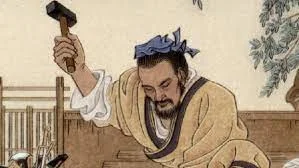
You probably can't think of one right now.
From a marketing perspective, the example above tells us that if your brand isn't number one in your customers' minds, it's like falling into mud; no matter how hard you try, the promotional effect will remain limited.
So how can you become number one? Isn't the top spot always reserved for a few large companies with abundant resources?
If you think that, then you're wrong. You can't be number one because you don't understand "positioning."
The term "positioning" reminds the author of a childhood anecdote:
One time, when the author was young, he was scolded by his father for being naughty during dinner. The author grinned and retorted, "Dad is number one at getting angry; Mom is number one at loving chicken wings; Little brother is number one at loving bubble tea."
Surprisingly, this encapsulates one of the most important marketing concepts in history – positioning theory.
"Why position yourself? Because no one will remember second place except for you!"
If you can't be number one in your industry/category, then create a new category for yourself. For example, compare the following brand values:
| Professional large housing estate interior renovation service | No.1 Renovation company recommended by owners of large housing estates in Hong Kong |
| Home renovation platform | No.1 Renovation师傅 (master craftsman) you must find for your post-marriage dream home |
Doesn't the slogan on the right instantly elevate the brand value by 50 times? If your clients are owners of large housing estates or newlywed homeowners, they will immediately think of you. So, anything and everything can be number one, as long as you know how to "reposition" yourself.
- Emotional Storytelling Marketing
Once upon a time, there was a blind old man begging on the roadside. In front of him, he placed a cardboard sign that read: "It's a beautiful day, but I cannot see it." At this, passersby looked at the sign, then at the old man, and then one after another, they took out their money, generously donating to help the old man overcome his difficulties.
Compared to writing "I am blind, please help me," which is a cold, emotionless logical deduction; "It's a beautiful day, but I cannot see it" is an emotional story. This sentence conveys, "Everyone, you make up a beautiful world, but alas, I cannot be a part of it." This can powerfully stir the emotions of passersby, softening their hearts and prompting them to donate.
The story above can also be applied to your promotional messages:
Are Hong Kong renovation and design company fees lacking standards, with very high "markups" in quotes? We can help you!
Renovation project progress is another headache. We can help you communicate directly with the master craftsmen!
- Perceived Value Marketing
The value of a commodity is generally divided into two types:
One is "tangible" value, such as product or service quality;
The other is our "perceived" value of the commodity.
Sometimes, the "tangible" value of a product is difficult to compete with others due to cost issues. In such cases, we can change people's "perceived" value.
In ancient times, King Frederick of Prussia discovered that wheat was often scarce, even though there was an alternative food that could replace wheat – the potato. It had the advantages of being abundant and nutritious.
However, despite the king's strong promotion, the people were unwilling to buy and eat potatoes. There were even rumors that consuming unappealing potatoes could cause psychological and physiological diseases. So, the King of Prussia implemented the following policy:
He ordered potatoes to be named "Royal Vegetables," to be eaten only by royalty and nobles. Commoners were forbidden from growing them; only the king could grow them. He also assigned soldiers to guard the potato fields, but secretly instructed the soldiers to be lax in their guarding, making it easy for commoners to steal potatoes.
Finally, the strategy worked. It successfully aroused the curiosity of the common people. Everyone wanted to know if potatoes were really that good. Those who stole potatoes even felt honored, believing that with every bite of potato, they were getting closer to the status of royalty. The rumors of psychological and physiological diseases were immediately dispelled, and potatoes henceforth became a staple food for Western commoners.
The story above demonstrates how the perceived value of potatoes was changed, transforming them from an inauspicious item into a precious treasure.
The FlowDigital team can help increase your website traffic and revenue, with long-term ROI potentially reaching 2.3x. Book your 30-minute free consultation now (https://flowclass.io/marketing)