Product Hunt Launch SEO Strategy: Spike to Sustained Traffic
Turn your 24-hour launch spike into a long-term organic traffic engine. Learn our proven Product Hunt launch SEO strategy to drive sustained growth.

You refresh your analytics dashboard, and the numbers are climbing faster than you can process. Upvotes are pouring in, comments are stacking up, and real-time active users are hitting record highs. Launch day feels like a massive victory. Then, exactly one week later, you check the same dashboard and see a flatline. The traffic has vanished almost as quickly as it arrived.
Treating a tech product launch as a one-time event carries a high opportunity cost. While the initial surge of attention is validating, the true value of a launch lies in its potential to build a long-term organic growth engine. If you walk away after the first 24 hours without a documented Product Hunt launch SEO strategy, you abandon thousands of high-intent impressions, valuable user-generated content, and secondary link opportunities.
Pre-Launch Keyword Mapping for Your Product Page
The foundation of SEO for tech product launches is laid weeks before you actually hit the "launch" button. A successful page on a high-authority domain like Product Hunt can rank in search engines for years, provided it is optimized for the terms your ideal users are actually searching for.
Before drafting your copy, map your product messaging to high-intent, long-tail search queries. Instead of describing your product with internal jargon or vague buzzwords, use the exact phrasing your target audience types into search engines when looking for a solution.
| Product Hunt Element | SEO Purpose | Optimization Tactic |
|---|---|---|
| Product Name | Brand recognition | Keep it clean and exact (e.g., "SurgeOrb") without keyword stuffing. |
| Tagline | Primary keyword targeting | Include your highest-value category or "alternative" keyword directly in this short phrase. |
| Description | Context and secondary keywords | Naturally weave in use-case variations, pain points, and feature-specific terminology. |
| Maker Comment | Deep relevance and semantic depth | Expand on the "why." Share the origin story using conversational but keyword-rich language. |
Integrate these target terms smoothly. A well-optimized maker comment establishes early relevance with search engines, ensuring your page is crawled and categorized correctly from day one.

Launch Day Execution: Maximizing Visibility and Engagement
The first few hours of a launch dictate its visibility on the platform, but the engagement generated throughout the day creates the textual footprint that search engines index. Following launching on Product Hunt best practices means treating every interaction as an opportunity to add context to your page.
Early upvotes and comments are critical for platform visibility. However, from an SEO perspective, the text within those comments is even more valuable. When users ask questions or provide feedback, they naturally use semantic variations of your target keywords.
Prompt, detailed replies to maker comments are essential. Instead of simply saying "Thanks for the support," take the time to answer questions thoroughly. Explain how a specific feature works, mention integrations by name, and discuss upcoming roadmap items. This expands the page's keyword footprint organically, providing search engines with rich, context-heavy text without resorting to keyword stuffing. Structuring your Q&A clearly is also an excellent way to optimize content to stand out in Google AI overviews, as AI models prefer clear, direct answers to user queries.
The Product Launch Backlink Strategy: Capturing Momentum
The traffic from your launch will eventually slow down, but the authority you build can be permanent. A proactive product launch backlink strategy turns fleeting platform mentions into high-quality inbound links that boost your own domain's authority for months to come through targeted digital PR for SaaS launches and high-trust B2B software directory SEO profiles.
Do not wait for links to happen organically. Use the visibility of launch day to execute a targeted outreach campaign.
- Tech Aggregators: Submit your newly launched product to specialized directories and tool aggregators that scrape or monitor Product Hunt for new software.
- Round-up Newsletters: Identify newsletter authors who curate "tools of the week" and send them a brief, personalized note highlighting your successful launch.
- Industry Blogs: Reach out to writers who cover your specific niche. Let them know your product just launched, gained traction, and offers a fresh solution to a problem they frequently write about.
When you capture this momentum quickly, journalists and bloggers discovering the product are much more likely to link directly to your domain rather than just mentioning your brand name.
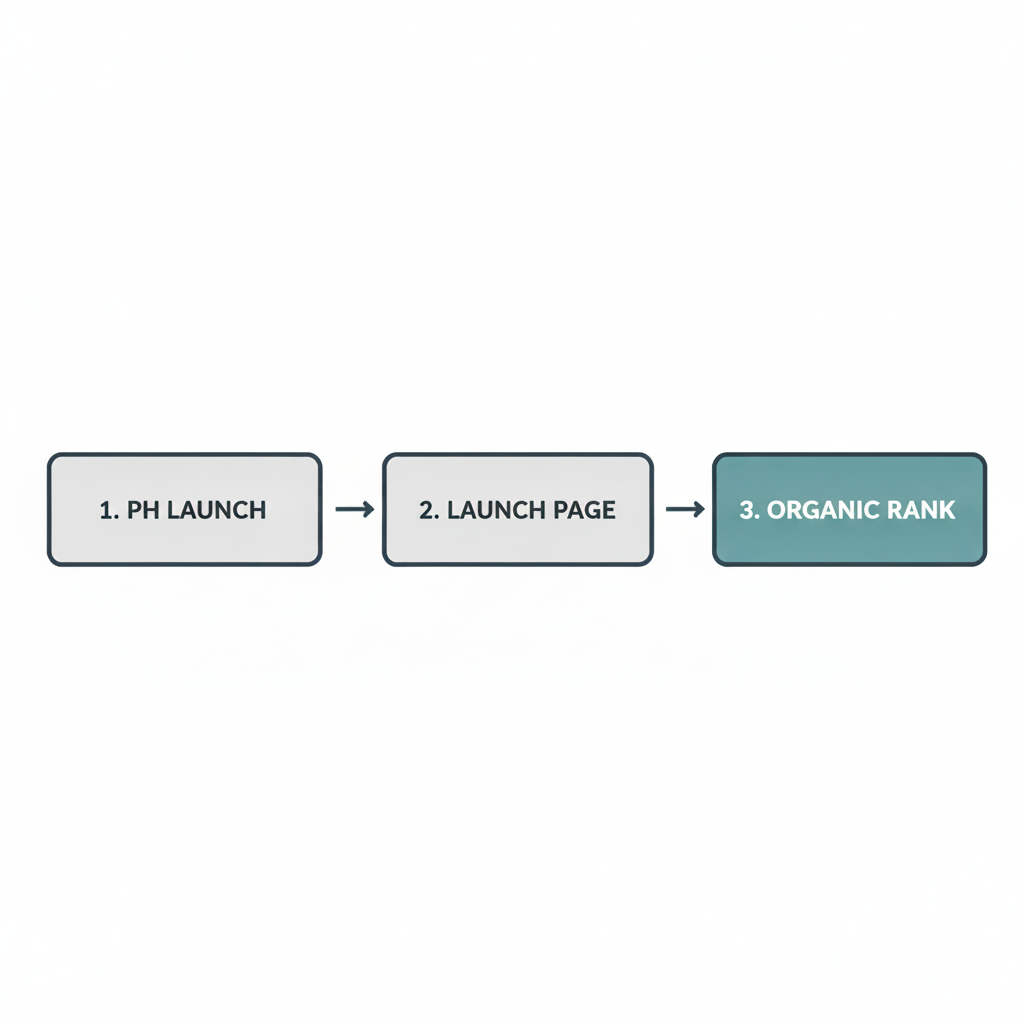
Content Adaptation: Driving Organic Traffic Post Launch
Once the initial excitement subsides, your focus must shift toward driving organic traffic post launch by adapting the user-generated content from your launch page. Product Hunt comments act as a massive, real-time focus group, revealing exactly what your users value and what confuses them.
Take the most common questions, praised features, and creative use cases from your Product Hunt Q&A and repurpose them into dedicated content on your own domain using SEO for feature launches. This workflow transforms temporary platform engagement into permanent SEO assets.
| Launch Feedback Type | Post-Launch Content Adaptation |
|---|---|
| Repeated user questions | Create a detailed FAQ page or technical documentation section. |
| Praise for a specific use case | Develop a dedicated landing page targeting that exact niche or industry. |
| Feature comparisons | Write an objective "vs" post comparing your tool to legacy alternatives. |
Building a hub-and-spoke content model around these topics establishes your site's topical authority. By hosting these expanded answers and tutorials on your own blog, you capture the long-tail search traffic of users looking for the exact solutions your early adopters validated.
How to Rank Product Hunt Pages in Brand Search
Product Hunt boasts exceptionally high domain authority, which you can leverage long after launch day. Knowing how to rank Product Hunt pages effectively allows you to dominate the search engine results pages (SERPs) for bottom-of-funnel searches.
When potential customers are close to a purchasing decision, they often search for terms like "[Brand Name] reviews," "[Brand Name] pricing," or "[Brand Name] alternatives." You want your Product Hunt listing to appear at the top of these specific searches because it serves as highly credible, third-party social proof.
To capitalize on this, ensure your product description explicitly mentions the legacy tools you replace. If your software is an alternative to a major enterprise tool, weaving that comparison naturally into your maker comment helps Google associate your Product Hunt page with that competitor's search queries. Encourage your early users to leave detailed reviews rather than just simple congratulations, as these paragraph-long reviews provide the exact sentiment analysis and keyword density search engines look for in ranking review pages.
Frequently Asked Questions About Launch SEO
Does a Product Hunt backlink pass SEO value?
Product Hunt links pointing to your domain are typically tagged as "nofollow," meaning they do not directly pass traditional link equity. However, the secondary exposure is highly valuable. The visibility on Product Hunt directly leads to followed, high-quality links from journalists, newsletter writers, and industry bloggers who discover your software on the platform and link to it from their own sites.
When should I start planning SEO for my tech product launch?
You should finalize your keyword strategy, map out your product page messaging, and prepare your target landing pages at least 4 to 6 weeks before your scheduled launch date. This gives you ample time to ensure your site architecture is ready to capture and convert the incoming referral traffic, and allows search engines to index your new landing pages before the traffic spike hits.
How long does it take for launch-day SEO efforts to show results?
While the direct referral traffic and brand awareness are instantaneous, compounding organic traffic takes longer. The SEO benefits derived from repurposing user content, optimizing your listing for brand search, and earning secondary backlinks generally take 3 to 6 months to mature and reflect in your regular organic traffic baseline.
Should I link my Product Hunt page directly to my homepage or a landing page?
Always use a dedicated, SEO-optimized landing page tailored specifically to the Product Hunt audience. A custom landing page that acknowledges the launch, reiterates the specific value proposition highlighted in your Product Hunt tagline, and aligns with the target keywords will significantly improve both your conversion rates and specific query relevance.
Next Steps for Your Post-Launch Growth Engine
A successful launch day is merely the opening chapter of a mature software lifecycle. To build a resilient business, you must transition from the short-term hype of launch week into a strategy focused on delivering consistent, long-term search value. By capturing momentum through strategic backlinks, optimizing your platform listing for brand queries, and aggressively repurposing user feedback into hub content, you transform a temporary traffic spike into a reliable acquisition channel.
Scaling your product operations after a launch requires the right infrastructure to maintain that momentum. Explore SurgeOrb's software solutions to streamline your workflows, support your growing user base, and keep your product moving forward long after the initial launch excitement has settled.
Related SaaS Growth & SEO Guides
To build a cohesive search engine acquisition funnel, explore these companion playbooks from the SurgeOrb Growth Library:
- SaaS Product Launch SEO Checklist: Waitlist to Traction
- Digital PR for SaaS Launches: Why Tech Journalists Ignore You
- SaaS Go To Market Strategy Framework: High-Impact Launch Plan
Ready to audit your technical foundations? Run a free real-time scan of your landing pages, schema markup, and meta tags with the SurgeOrb Website Audit Tool, or generate rank-ready long-form articles in minutes using our AI Blog Writer.


