SaaS Go To Market Strategy Framework: High-Impact Launch Plan
Build a powerful SaaS go to market strategy framework from scratch. Learn how to launch a B2B SaaS product with a targeted channel and distribution plan.

Picture a talented software engineering team that spends 14 months building a revolutionary customer data platform. They obsess over the user interface, ship bug-free code, and finally deploy to production. They announce the release on a couple of tech forums, expecting a flood of early adopters, and receive absolute silence in return.
This scenario plays out daily in the tech industry because relying solely on product features is no longer a viable acquisition model. The immediate stakes of ignoring early marketing are brutal: customer acquisition costs skyrocket, server bills accumulate, and cash runway evaporates before the company can prove market demand. Building an exceptional product is only half the battle. Surviving the critical first year requires a ruthless, well-documented SaaS go to market strategy framework to ensure that when you launch, there is an audience ready and waiting to buy.
Core Components of a High-Impact B2B SaaS Marketing Plan
A resilient acquisition engine must be built long before the software hits the public market. To avoid scrambling for users on launch day, you need a disciplined lean SaaS SEO strategy and fundamental marketing pillars structurally integrated into your business model. A mature B2B SaaS marketing plan revolves around clear product positioning, a defined technical infrastructure for tracking user behavior, and a strategic selection of acquisition channels.
Understanding which channels to activate first is the most common hurdle for new founders. Rather than spreading limited resources across every social platform and ad network, teams must evaluate channels based on their capital requirements, time horizons, and alignment with the startup's current growth stage.
| Channel Type | Typical Cost | Time-to-Return | Ideal Startup Stage |
|---|---|---|---|
| Organic (Content & SEO) | Low to Medium | 4 to 8 months | Bootstrapped / Seed (Pre-launch building) |
| Outbound (Cold Email / LinkedIn) | Low | 1 to 3 weeks | Early traction / Founder-led sales |
| Paid (Search & Social Ads) | High | Immediate (Days) | Series A / Post-Product-Market Fit |

Step-by-Step: How to Launch a B2B SaaS Product Successfully
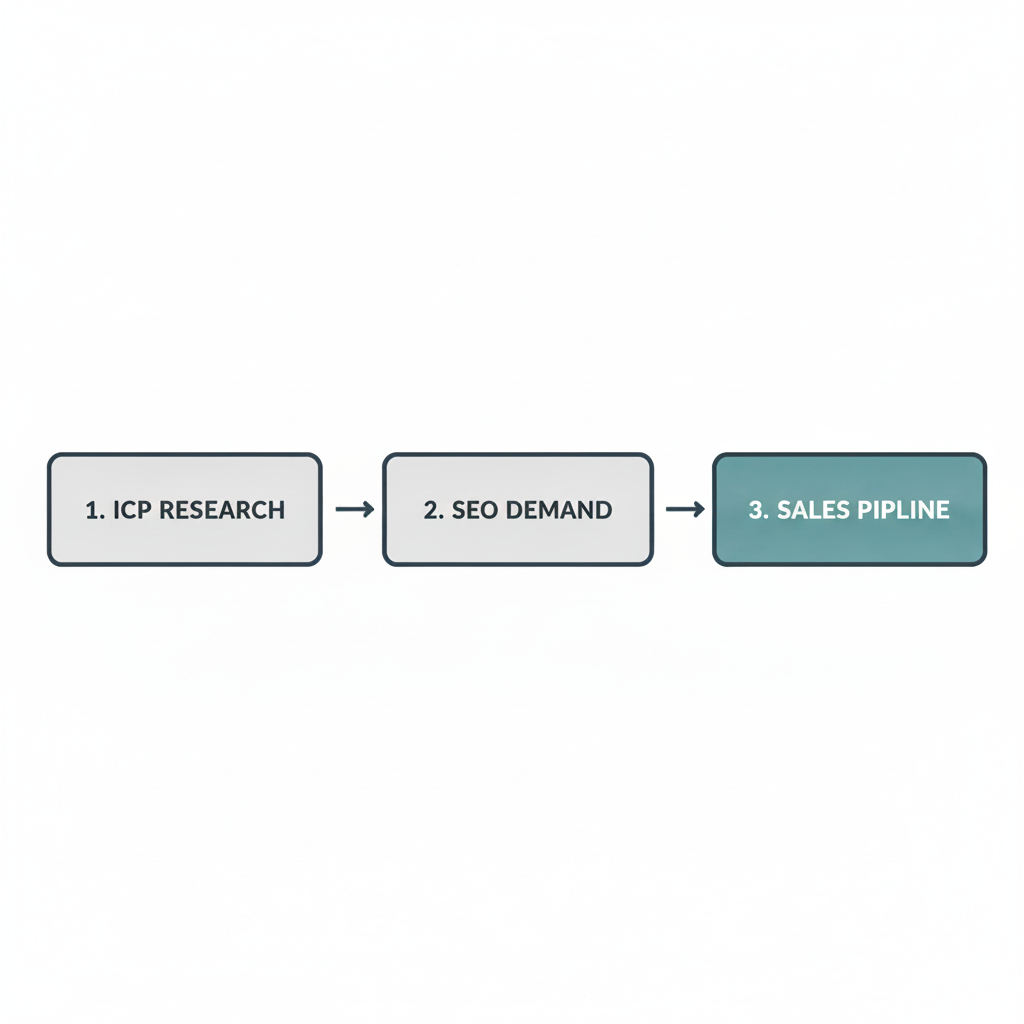
Executing a B2B software launch plan requires moving from abstract planning to sequenced, aggressive action. Taking a product from zero to one involves locking down who the product serves, building the pathways to reach them, and orchestrating the actual rollout.
Identifying Ideal Customer Profiles and Positioning
Generic positioning is the enemy of early-stage software. Targeting "all sales teams" or "any small business" dilutes your message and confuses potential buyers. You must narrow down a specific, hyper-addressable audience segment that experiences the pain point your software solves on a daily, visceral level.
To nail down your messaging during early customer discovery, ask these critical questions:
- What specific workflow failure triggers their immediate search for a new solution?
- Which legacy tools or manual processes are they currently duct-taping together?
- Who holds the actual purchasing power versus who logs in as the daily user?
- What metric defines a successful workday for this specific role?
Activating Your Core Acquisition Channels
Instead of attempting to master podcasts, paid search, and social media all at once, choose just one or two primary channels to capture initial demand. Many early-stage teams find success by pairing founder-led LinkedIn outbound with a foundational search strategy. Setting up these channels early allows you to capture waitlist emails and generate beta signups before the code is fully deployed.
Setting this up requires discipline. First, establish a landing page that clearly articulates the product's core value proposition. Next, begin publishing targeted material that addresses the exact technical challenges your ideal customer faces. If you choose search as a primary lever, implementing AI SEO secrets and optimization techniques ensures that your early technical guides are visible to prospects actively researching solutions. Drive all early channel traffic to a single call-to-action: a beta application or a priority waitlist.
Leveraging a Go To Market Strategy Template for SaaS
Miscommunication during a launch window can cause critical tasks to slip through the cracks. Using a dedicated go to market strategy template for SaaS forces the entire team—from product developers to content marketers—to operate from a single source of truth. This template maps your launch timeline, assigns budget constraints, and clarifies channel responsibilities.
Every highly functional launch template must actively track the following elements:
- Hard deadlines for content publication and asset creation
- Daily caps and total budgets for paid ad spend
- Structured feedback loop protocols for early beta users
- Sequence checklists for launch day community platform pushes
Decoding Successful SaaS GTM Strategy Examples
Studying real-world SaaS GTM strategy examples reveals that there is no single right way to launch, provided the strategy aligns perfectly with the buyer's behavior. Consider an enterprise cybersecurity SaaS that launched into a crowded, high-trust market. Instead of relying on flashy ads, they executed a rigorous content-led GTM strategy. By publishing highly technical, deep-dive threat analysis reports months before their software release, they built immense credibility. By optimizing content for search platforms, they captured the attention of Chief Information Security Officers who eventually signed multi-year contracts as early adopters.
Conversely, a collaborative design tool aimed at individual creators and small agencies utilized a product-led growth (PLG) motion. Their marketing tactics did not rely on booking sales demos. Instead, they built a viral loop directly into the software interface. Whenever a single user created a project, they had to invite external stakeholders via email to view or comment on the canvas. The product became its own marketing vehicle, transforming single-player utility into multi-player virality, drastically lowering acquisition costs while scaling the user base exponentially.
Designing a B2B Software Launch Plan That Scales Post-Launch
A frequent pitfall for new software companies is the post-launch slump. Even an explosive Product Hunt launch SEO strategy or social announcement often yields a massive initial spike, followed by a terrifying drop in momentum by week three if compounding organic search channels are missing. To prevent this, your B2B software launch plan must include a transition strategy for days 30 to 90, shifting the focus from initial hype to sustainable, recurring acquisition.
Scaling post-launch means heavily prioritizing retention metrics over new visitor acquisition. If your early users churn within the first month, funneling more money into ads is a waste of capital. Focus on expansion marketing strategies: automated onboarding email sequences that guide users to their "aha" moment faster, in-app tooltips that highlight underused features, and direct customer success outreach to your most active accounts.
Frequently Asked Questions About SaaS Go-To-Market Plans
What is the most cost-effective channel for early-stage SaaS?
For bootstrapped or early-stage B2B startups, organic content and founder-led social selling usually yield the best return on investment. While these channels require a heavier investment of time and industry expertise, they cost very little in hard capital and build long-term compounding authority that paid ads simply cannot replicate.
How long should a B2B software launch plan take to execute?
A realistic timeframe typically requires a 60 to 90-day runway prior to the official launch date. This window provides sufficient time for pre-launch audience building, finalizing technical marketing setups, testing user tracking integrations, and creating the necessary sales enablement assets without rushing.
When should we transition from founder-led sales to a marketing-led GTM?
The transition should occur when you hit clear revenue milestones and strong signals of product-market fit—often when you notice organic referral loops forming and your customer acquisition cost stabilizes. Once the founders can no longer handle the sheer volume of inbound demos, it is time to hire a dedicated marketing team and scale up paid acquisition channels.
Which metrics matter most in the first 90 days of a SaaS launch?
Avoid obsessing over raw website traffic or social media impressions. The critical performance indicators during the first 90 days are Customer Acquisition Cost (CAC), early cohort churn rates, and activation velocity—which measures exactly how fast a new signup successfully completes your core product workflow for the first time.
How does a PLG model alter the standard GTM framework?
Product-Led Growth completely shifts the marketing focus away from gating the product behind traditional sales demo requests. Instead, a PLG framework optimizes all marketing efforts toward driving frictionless free trial or freemium sign-ups, relying on outstanding in-app user experiences and inherent virality to drive upgrades and expansion revenue.
Sustaining Momentum After the Initial Launch Window
A product launch is not a finish line; it is merely the opening sequence of a continuous marketing cycle. The weeks and months following your release are where the real company-building happens. The framework demands constant testing, rigorous measuring of user behavior, and ruthless refining of your messaging as you learn exactly how real customers interact with your software in the wild.
By structuring your approach around clear positioning, focused channels, and post-launch retention, you build a sustainable growth engine that outlasts the initial hype. If your team is preparing to bring a new software product to market and wants to ensure the distribution engine is perfectly calibrated, we invite you to explore more of our software launch insights at SurgeOrb to help streamline and accelerate your next big release.
Related SaaS Growth & SEO Guides
To build a cohesive search engine acquisition funnel, explore these companion playbooks from the SurgeOrb Growth Library:
- SaaS Product Launch SEO Checklist: Waitlist to Traction
- Product Hunt Launch SEO Strategy: Spike to Sustained Traffic
- Digital PR for SaaS Launches: Why Tech Journalists Ignore You
Ready to audit your technical foundations? Run a free real-time scan of your landing pages, schema markup, and meta tags with the SurgeOrb Website Audit Tool, or generate rank-ready long-form articles in minutes using our AI Blog Writer.


