5-Minute Deep Dive: The Viral Formula Behind K-Drama Storytelling (Part 1)
Living in Hong Kong, it's impossible to avoid the fervent K-drama fan base, with hits like 'My Love from the Star,' 'Descendants of the Sun,' and 'Itaewon Class' captivating audiences. Beyond charming Oppas, what creative strategies make K-dramas so incredibly successful?

Living in Hong Kong, you're bound to know a few die-hard K-drama fans. From "My Love from the Star" to "Descendants of the Sun" and the recent "Itaewon Class," these shows have all enjoyed immense popularity. Beyond the handsome Oppas who charm countless viewers, what other winning techniques do K-dramas employ in their storytelling?
Generally, we tend to think that a good drama should be fast-paced, feature novel themes, and be full of surprises. However, forgive my audacity here, but most K-drama story settings seem to contradict both of these points.
In terms of pacing, K-drama plots usually progress quite slowly. Often, even skipping a few episodes in the middle doesn't significantly hinder understanding the storyline. In contrast, American dramas are relatively fast-paced. One of my personal favorites, "Prison Break," sees the protagonist plan a crime and get arrested and imprisoned all within a single episode. If viewers miss an episode, they can easily get lost in the subsequent content.
Furthermore, according to my incomplete statistics, romance accounts for a large proportion of K-drama genres. Even when themes involve history, the workplace, or even crime thrillers, elements of romance are almost always interwoven. Due to these thematic constraints, story tropes are often repeated: the male lead is the heir to a trillion-dollar chaebol family, only to fall for a Cinderella-like female lead; after they fall in love, one of them usually develops a terminal illness, only to miraculously recover in the end. After watching a few, you can almost predict the plot developments.
Based solely on their stories, K-dramas might not seem particularly captivating...
Stop! Please, all you die-hard K-drama fans, put down your pitchforks and don't leave... because what I'm about to say next is today's main point!
There's a reason for all of this!
First, regarding the slower plot progression, you must understand that K-dramas are often broadcast during family-friendly timeslots in Korea, and their viewing environment is inherently highly open. If viewers have more pressing matters at hand, like eating a meal or making a phone call, and the plot is too fast-paced, they might switch channels if they miss parts of the story and can't keep up. For TV stations focused on ratings, this would be a disaster.
But how can a story remain exciting if the pace can't be too fast? K-drama screenwriters' trump card lies in two words: delicate intricacy.
In terms of character development, K-drama characters are arguably the most delicately crafted among all TV series. This isn't just about the so-called "visuals" of the male and female leads, but more importantly, the deliberate creation of contradictions in character design. For example, Do Min-joon C from "My Love from the Star" bears the labels of alien, superhuman, and university professor. Or Park Sae-ro from "Itaewon Class," a pub owner with a past involving revenge and imprisonment. Their identity settings inherently create suspense that draws viewers in.
As for thematic settings, while romantic elements are "always present" in K-dramas and may not seem hugely innovative, the screenwriters' grasp of societal changes is a major guarantee of consistently high ratings. For instance, when economic conditions are good, nostalgic dramas that recall past hardships and sweet memories often become popular. "Reply 1988," hailed as one of the best K-dramas, garnered widespread acclaim precisely because it tapped into the pulse of its era.
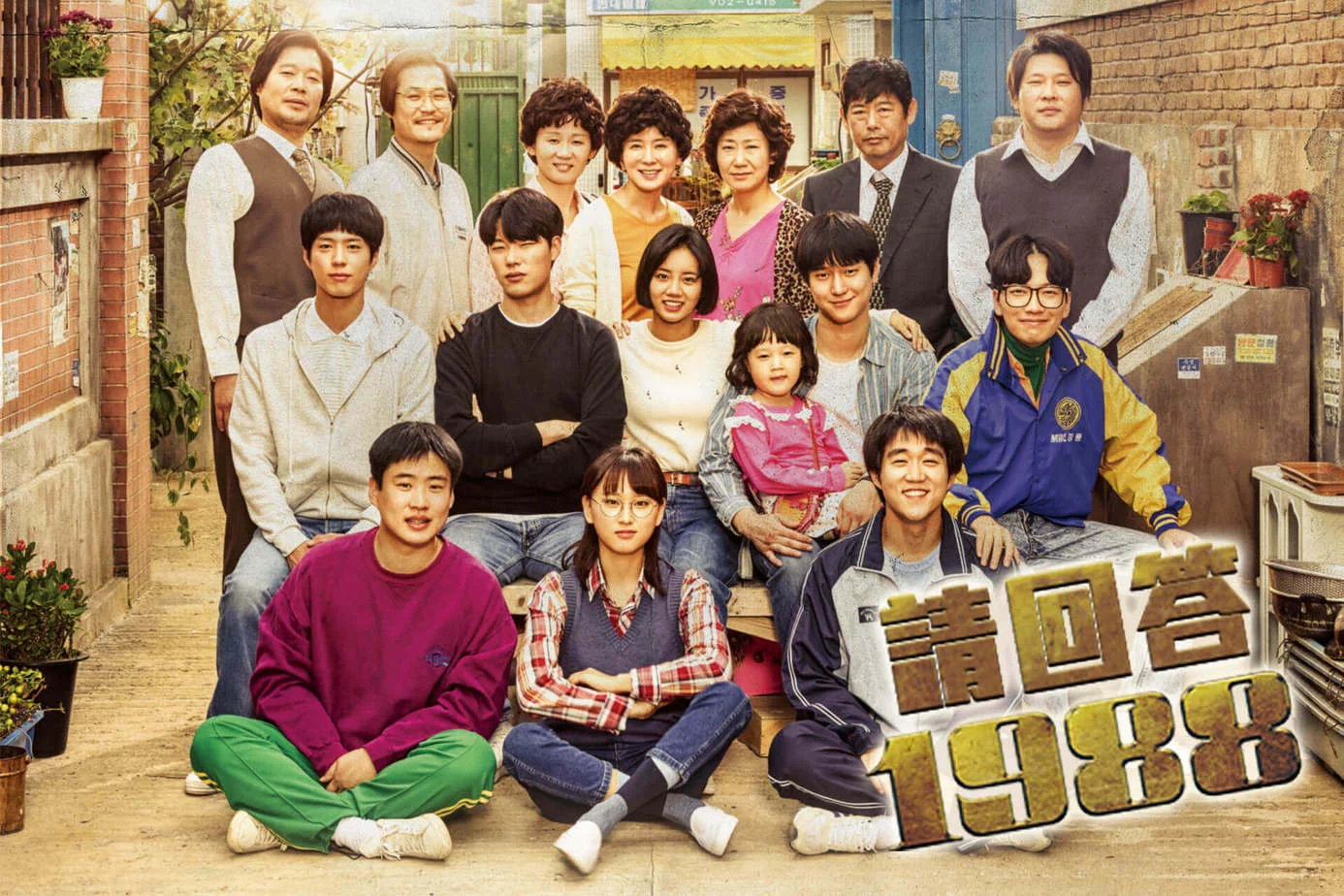
Reply 1988 Still
Finally, I must add a disclaimer. The initial comments are based on my incomplete understanding of K-dramas. If anyone feels I've said anything incorrectly, please point it out (just don't unfollow me 😉)! And if you'd like to leave a comment sharing your favorite K-dramas, that's also very welcome!
References: Jung Sook, How K-Dramas Tell Stories Getdao, Li Nannan's Interpretation of How K-Dramas Tell Stories
Original Author: Sherman Leung (https://instagram.com/daydayknowdyeah)