Google SEO in the Age of AI: How to Drive More Traffic to Your Company Website with AI Overviews & Gemini
In the AI era, Google Search has shifted from traditional blue links to AI-generated answers like AI Overviews and Gemini-driven Search Canvas, fundamentally altering user behavior and posing new challenges for company websites. To maintain traffic, businesses must embrace Generative Engine Optimization (GEO) and strengthen E-E-A-T through high-quality content and technical SEO to be cited in AI summaries.
In the AI era, Google Search has shifted from traditional blue links to AI-generated answers, such as AI Overviews and Gemini-powered Search Canvas. This transformation has changed user behavior and introduced new challenges. For company websites to maintain traffic, they must embrace Generative Engine Optimization (GEO) and strengthen E-E-A-T, ensuring they are cited in AI summaries through high-quality content and technical SEO.
Google search behavior is rapidly evolving, with users preferring zero-click searches that provide direct answers from AI overviews, reducing traditional click-through rates by 30-60%. However, this also creates opportunities: high-quality websites are more likely to be selected as AI sources, boosting brand exposure.
It is crucial for company websites to proactively address the challenges posed by AI Overviews and Gemini, as AI prioritizes authoritative content. Those who ignore these changes risk losing significant traffic, especially in highly competitive markets.
This guide provides practical Google SEO strategies, including content optimization, technical foundations, and AI adaptation methods, to help you stand out in the Gemini era.
Learning these strategies will help company websites gain more organic search traffic amidst the AI wave, using GEO and LLMO measures to ensure content is cited by AI and drives conversions.
Deep Dive into Google SEO Core Concepts
What is Google SEO? Why is it Crucial?
Google SEO encompasses a series of practices to optimize websites for higher Google search rankings, including content, technical, and link strategies. It plays a central role in digital marketing, generating free, long-term traffic.
Improving a website's ranking in search results increases visibility, making it easier for potential customers to discover the brand. In the AI era, ranking refers not only to blue links but also to AI citations.
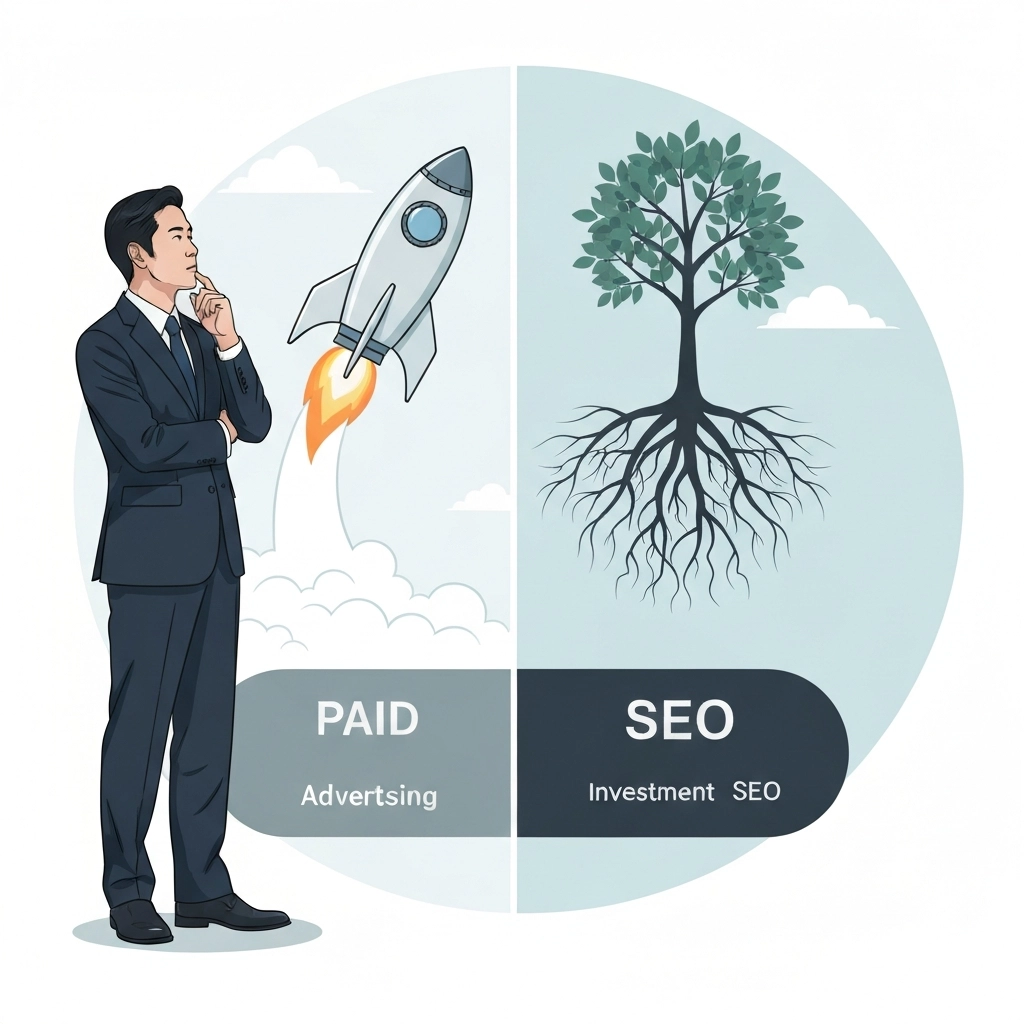
Organic search traffic is invaluable for brand exposure and business growth, as it delivers high-converting visitors at a lower cost than paid advertising, forming the foundation for sustainable growth.
How Google's Search Algorithm Works
Google's algorithm operates through crawling, indexing, and ranking: robots scan webpages, store content, and then sort it by relevance and quality.
Updates like RankBrain (machine learning to understand intent), BERT (natural language processing), and MUM (multimodal understanding) have enhanced the identification of user intent. The AI era further emphasizes contextual relevance.
User intent is central; providing content that matches needs, whether informational, navigational, or transactional, satisfies the algorithm and improves rankings.
Technical SEO: Ensuring smooth crawling, fast speed, and security.
Link Building: Acquiring high-quality external links to boost authority.
User Experience: Fast loading times, low bounce rate.
E-E-A-T (Experience, Expertise, Authoritativeness, Trustworthiness) is a crucial measure of authority, especially valued by AI to ensure summary accuracy.
Continuous monitoring and optimization are key, as algorithms update frequently. Regular adjustments are necessary to stay competitive.
Optimizing Content Strategy: Keywords and E-E-A-T
How to Conduct Effective Keyword Research
Identify target audience search intent, such as question-based queries ("how to…?"), and find popular terms.
Use tools like Google Keyword Planner or SEMrush to explore long-tail keywords (e.g., "company website AI SEO strategy") and analyze competitor strategies.
Plan keyword placement:
Place primary keywords in titles and H1s.
Distribute long-tail keywords in subheadings and body text.
Ensure relevance and broad coverage.
Creating High-Quality, User-Oriented Content
Content should be valuable, original, and provide in-depth answers to questions, offering step-by-step solutions.
Integrate multimedia like images and videos to enhance the experience; use Alt text to optimize image SEO.
Ensure clarity and readability: short paragraphs, bolded highlights, lists, and real-world examples.
On-Page SEO Best Practices: Page Titles, Meta Descriptions, and Structure
Optimize title tags (50-60 characters, including keywords) and meta descriptions (150-160 characters, enticing clicks).
Use H1-H6 tags to organize content:
Tag
Purpose
Example
H1
Main title, one per page
Google SEO Guide
H2
Major section
Content Strategy
H3
Subsection
Keyword Research
H4-H6
Details
Step 1, 2
Clear URL structure, such as /google-seo-ai-overview, aids understanding.